(Live, Oct 28, 2025)
By Subhranil Dhar — Resource Person / Inclusion Education Expert
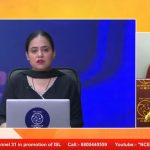
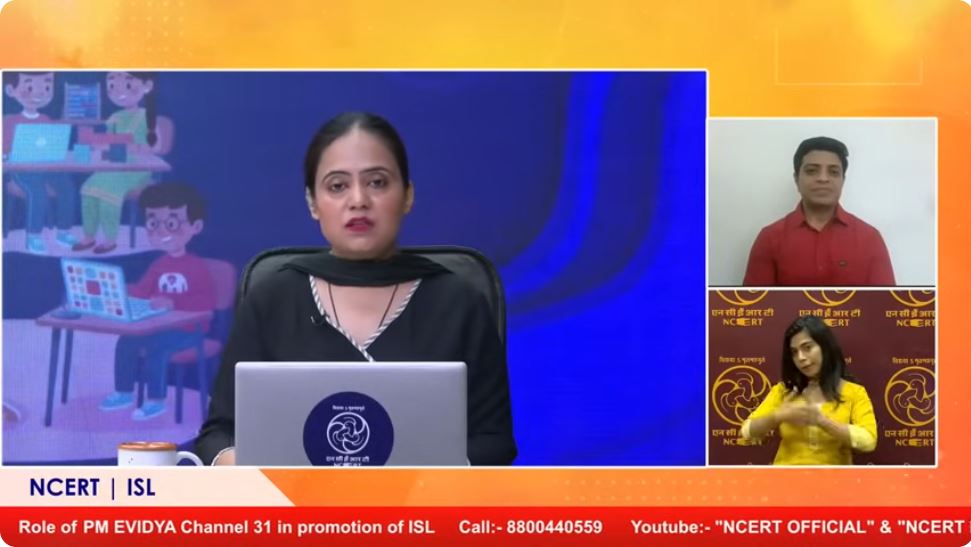
October is Dyslexia Awareness Month — and on October 28, 2025 I had the humbling, nerve-tingling privilege of joining CIET-NCERT’s live webinar “Understanding SLDs: Knowing & Teaching All Your Learners Including SLDs.” The session featured Prof. Anupam Ahuja (Former Head — Groups with Special Needs & Head, International Relations, NCERT) and Prof. Renu Malviya (Professor & Dean, Faculty of Behavioural Sciences, SGT University). I was invited as a Resource Person and later introduced as an Inclusion Education Expert. The webinar was telecast live on PMeVidya channels and the NCERT Official YouTube channel.
Here’s my account of the day — what it felt like to be on that virtual stage, what I shared, and the ideas that stuck with me
Looking at the moment: nerves, honour, and a strange calm
I won’t pretend I wasn’t terrified. Public speaking has always been hard for me — I’m shy, I get nervous, and sitting “beside” such esteemed educators (even if I was the only one online while they were in-studio) made my stomach flip. Still, when the host introduced me and asked me to share my childhood experiences with dyslexia, something shifted. The fear was still there — but so was purpose.
Being named an Inclusion Education Expert in that moment felt like recognition not only of my work, but of the journey I’ve lived: struggling with letter reversals, slow dictation, math symbol confusion, and social awkwardness — and learning to turn those.
differences into strengths. I shared how art, rhythm, movement, and the simple act of refusing to give up rewired how I learn and engage with the world.
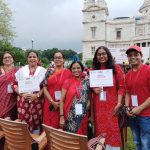
I also want to thank the many educators who supported me before and after the session: Prof. Bharti Kaushik, Prof. Anupam Ahuja, Ms. Nupoor Jhunjunwala, Ms. Massarat Khan, Ms. Nandini Singh Chatterjee, Ms. Jugnu Agarwal, Prof. Renu Malviya and others in our WhatsApp group — your warmth steadied me.
And a special shoutout to our ISL interpreter, Naina, and the whole NCERT-CIET production team for making the live experience accessible and smooth.
What I shared (short version) — lived experience that teachers can use
I spoke honestly about elementary but powerful realities of growing up with dyslexia: confusing letters (b/d, p/q), jumping or skipping words, slow decoding, direction and number confusion, and how these translate into emotional experiences — feeling different, misunderstood, and anxious. But I also shared what helped me:
- Learning by doing: I don’t learn well by rote or silent reading. I learn by seeing, feeling, and creating. Visual art and hands-on making were my classrooms.
- Rhythm and voice: Listening — whether a teacher reading aloud, or recording lessons and listening back — turned abstract text into story and memory.
- Movement & multisensory strategies: Rhythm, role play, tactile segmentation (breaking large concepts into concrete pieces) helped build understanding and retention.
Refusal to be defined by deficits: Believing I wasn’t “dumb” but simply different made me persistent.
What the experts emphasized — practical lessons for classrooms
Both Prof. Anupam Ahuja and Prof. Renu Malviya reinforced points that are crucial for everyday classrooms:
1. Know Your Learner (KYL) — ask students how and when they learn best. Let them describe or draw their learning preferences. Their answers are invaluable; they tell you how to plan instruction.
2. Make learning active and enjoyable — learning is not switching on/off with the bell. It must be meaningful and engaging; mistakes are a natural part of learning.
3. Use multisensory teaching — segmentation (cutting content into concrete pieces), storytelling, rhythm, role-play, and audio-visual aids benefit all learners, not only those with
SLDs.
4. Keep students in the classroom — don’t isolate. With small changes and accessible TLMs (teaching-learning materials), children with SLDs can fully participate in mainstream classrooms.
5. Design for comprehension, not speed — slow processing isn’t inability; it’s a different rhythm. Provide time, chunk information, and emphasize understanding over rote recall.
Prof. Ahuja’s repeated message — learning is active, unique, and lifelong — paired beautifully with Prof. Malviya’s focus on translating abstract concepts into concrete, sensory experiences.
My top practical takeaways teachers can use tomorrow
- Ask simple, student-facing questions (When do you learn best? What makes you nervous? When do you understand quickly?) and build lessons from those answers.
- Segment content (e.g., break “4392” into 4000 + 300 + 90 + 2 with visual tiles or place-value cards).
- Use voice & recording — let students listen to lessons (teachers can record short audio summaries). Hearing rather than only reading helps comprehension.
- Make visuals tactile — raised shapes, highlighted lines, and manipulatives reduce overload.
- Embed rhythm & story — mnemonics, songs, and short skits turn hard facts into memorable experiences.
These techniques aren’t “special” services — they are good teaching that benefits every child in a 40-student class.
A closing reflection
Standing in front of a national audience (even virtually) and telling my story was both anchoring and liberating. My message was simple: children with SLDs are first children — Rohit, Rahul, Anita — not acronyms. With curiosity, respect, and small classroom practices, teachers can make schools places where every learner thrives. I walked off that webinar tired but hopeful — and honoured to have been part of a conversation that matters.
If you watched the session, I’d love to hear what connected with you most. If you’d like, I can:
- Turn this into a formatted PDF for NCERT or your blog,
- Create a shorter social caption for LinkedIn/Twitter/Instagram, o
- Pull out 3–5 classroom posters/graphics you can use for in-class KYL prompts.
Thank you to CIET-NCERT for inviting me, to the expert panel for their insight, and to every teacher committed to inclusive education.
— Subhranil Dhar
To watch the entire presentation please click here: https://www.youtube.com/live/zQiE1D-e07U?si=j6linBdA2bNsd2YI